A Lab Weighed 10 Bras Worn By Women Over 60 After One Warm Day. The Foam Cups Held The Most Sweat.
Twelve women aged 62 to 77 wore each garment through an ordinary warm day. A textile lab weighed every one before it went on and again when it came off. The gain in weight is the sweat the garment was still holding against her. Ten are ranked below, lightest first.


Every woman over 60 knows what her bra feels like at three o'clock on a warm afternoon. What nobody has told her is where the damp is sitting, or why one bra is worse than another.
So our test desk paid an independent textile testing lab in Georgia to find out the only way a lab can: with a balance. Fabric that has taken up sweat weighs more than the same fabric dry. Weigh a bra before it goes on and again when it comes off, and the difference is what it is holding.
The lead technician, Renee Halvorsen, is 61 and has tested textiles for 24 years, most of them weighing how much water towels and workwear take up. “I have weighed ten thousand wet towels,” she told us. “I had never once put my own bra on the pan at the end of a July day. When I did, it was fifteen grams heavier than it had been at breakfast.”
The bra with the thickest foam cups came off holding eight times the sweat of the lightest garment in the test.
Same twelve women, same weather, same kind of day. A level tablespoon of water weighs just under 15 grams. Two of the nine bras came off holding more than that.The ranking10 Bras, Ranked By The Sweat They Were Holding At 7pm
Least held first. Each figure is the average weight gained between 7am and 7pm across all twelve women, in grams.

The lab's report codes the nine bras A to I and we describe each by type. Every bra from fourth place down has foam in the cup, either molded in or as a removable pad. The three garments at the top have none.
In a hurry? See the one that held the leastWhat the balance showedFour Things The Foam Bra Cups Had In Common
Four-Fifths Of The Sweat In A Foam-Cup Bra Was In The Foam

On the last wear day Renee took scissors to the seven bras with foam in them. She cut each cup out the minute the bra came off, peeled the foam from its fabric, and weighed the two separately.
The foam in those seven bras measured between 6 and 11 millimeters thick. It is open-cell foam, which means it is full of tiny connected air spaces. Those spaces are what make a cup hold a smooth round shape on a hanger. They are also what take up moisture.
“Then the foam is sealed between two layers of fabric,” Renee says. “Moisture gets in from the skin side all day. It has almost no way back out, because there is no moving air inside a bra cup. So the cup takes it up and keeps it, right where the bra sits closest to you.”
By 3pm The Foam Bra Cups Were Already Holding Most Of The Day's Sweat

Average grams of sweat held, by time of day. Seven foam-cup bras, two unlined bras, one tank.
The seven bras with foam averaged 9.1 grams by 3pm and 12.7 grams by 7pm. Nearly three-quarters of the day's total was already in the cups by mid-afternoon.
The two unlined bras behaved differently. They gained weight through the morning and then leveled off: a single layer of fabric gives moisture up to the air about as fast as it takes it in. The foam cups never leveled off. Their line was still climbing at the last weighing of the day.
That is the three o'clock feeling measured in grams. The bra has not got tighter. The cups have got heavier and wetter, and they are the part pressed closest to you.
The “Cooling” Bra Held More Sweat Than A Plain Underwire Bra
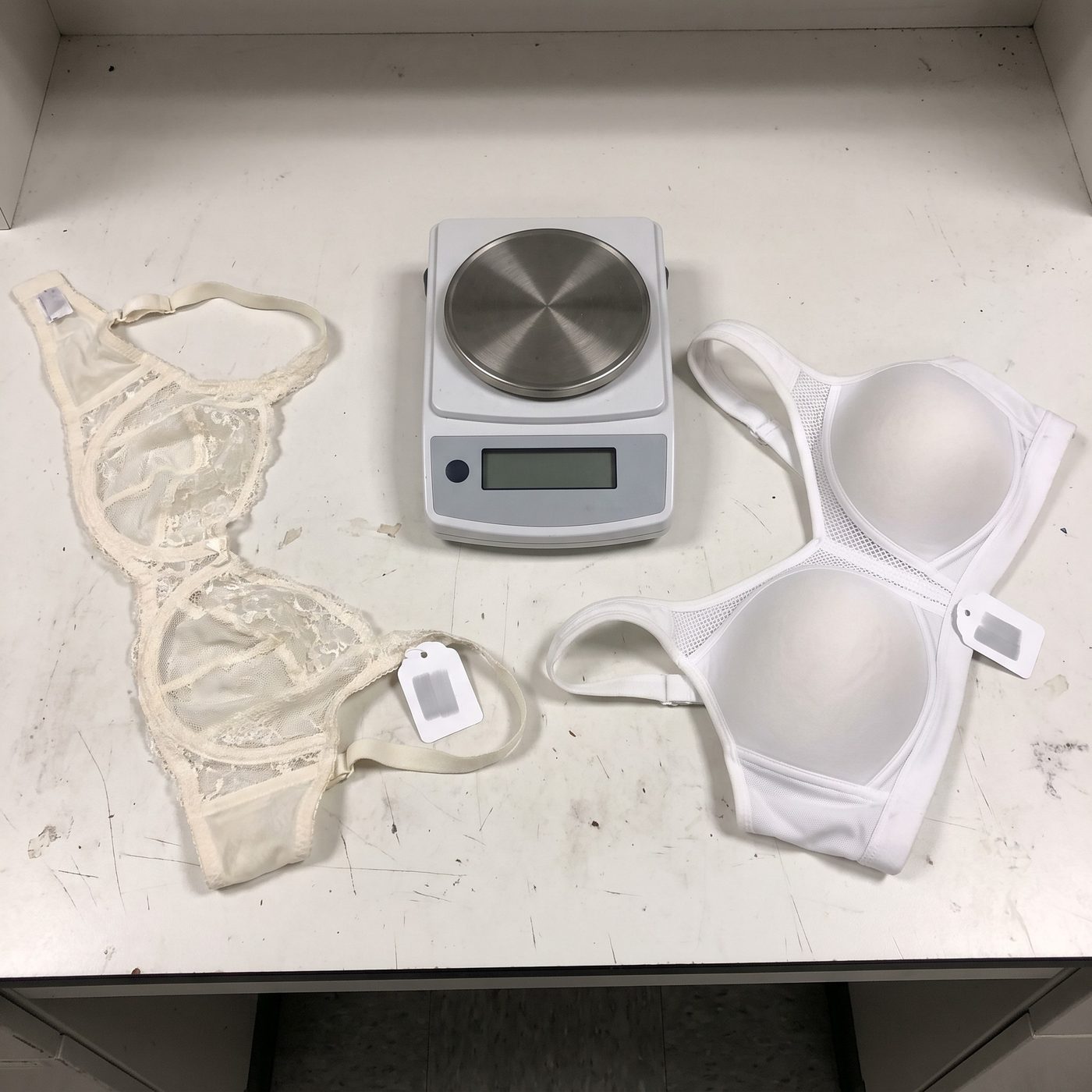
This was the pair Renee weighed twice. The bra sold to women over 60 for hot weather, wire-free with mesh panels, came off holding 70 percent more sweat than an old-fashioned lace underwire with nothing in the cups.
“The mesh is real. It is on the sides and between the cups,” she says. “The sweat was not there. It was in the cups, and the cups on this bra are eight millimeters of foam, the same as the T-shirt bra. They put the vents on the part that was not holding the water.”
The same was true of the bras with removable pads. A pad you can take out is still a piece of foam while it is in. The two bras with removable pads placed fourth and sixth.
A Bra Is Worn Four Days Between Washes, And The Foam Cups Never Dry Out

A bra does not go in the wash every night. We asked the twelve women on the panel and 412 Women's Health Insider readers how many times they wear a bra before washing it. The average was 4.3 wears. Seven of the nine bras in the test carry a label that says hand wash and do not tumble dry, which is most of the reason.
So the lab checked what a foam cup does overnight. At 7am, after twelve hours on a rack, the seven foam bras were still holding an average of 2.9 grams they had not given up. Then Renee had three women wear three of the foam bras four warm days running, hung up each night and not washed, the way a bra is really worn.
By the fourth morning those bras were going on already holding more than an unlined bra holds at the end of a whole day. The foam never got back to dry between wears.
“That is not anyone being careless,” Renee says. “The label tells her not to machine wash it and the foam will not dry overnight. The bra is built so that it cannot be clean and dry every morning.”
The verdictThe One Garment With No Foam Bra Cup To Hold The Sweat

The tenth garment is a tank with the bra built into it. Worn through the same warm days by the same twelve women, it gained an average of 2.1 grams by 7pm. That is about a third of what the best bra in the test held, and an eighth of what the worst one held.
It also did not climb through the afternoon. It read 1.6 grams at 3pm and 2.1 at 7pm, where the foam cups put on another three and a half grams in the same four hours.

Renee turned it inside out to see why. The cups are thin and sewn into the lining all the way round. There is no thick foam and no removable pad, so there is nowhere for a tablespoon of water to sit. The cup shapes and covers the bust. The holding is done by the fitted body of the tank and by straps as wide as three fingers, with no band under the bust at all.
Then came the part that settles the fourth finding. On the rack overnight the tank was back to its dry weight in 1 hour 50 minutes. And it never needed the rack, because its label says machine wash warm, tumble dry low. The lab washed and dried it with an ordinary load every evening of the test. It went on dry every single morning.
“That is the whole difference,” Renee says. “A foam bra is worn four days and never quite dries. This goes in the machine with her T-shirts every night and starts at zero.”
Side by sideLeast Sweat Held Against The Two Bras Most Women Over 60 Own
| Measured | Freeform Tank | Wire-free “cooling” bra | Foam-cup underwire bra |
|---|---|---|---|
| Cups | Thin, sewn into the lining | Molded foam, 8 mm | Molded foam, 9 mm |
| Sweat held at 3pm | 1.6 grams | 7.9 grams | 10.8 grams |
| Sweat held at 7pm | 2.1 grams | 10.7 grams | 14.9 grams |
| Dry again on a rack | 1 hr 50 min | Still damp at 7am | Still damp at 7am |
| Care label | Machine wash, tumble dry | Hand wash, line dry | Hand wash, line dry |
| Band under the bust | None | Wide elastic | Elastic, two hooks |
| Fastening | Pulls on, no hooks | Three hooks | Two hooks |
| Straps | Three fingers wide | Wide, padded | Narrow |

Which one is garment J
The lab's report identifies every garment by a letter, and we have described the nine bras by type. We are naming the tenth because every reader who saw the draft asked. It is the Freeform Tank, made by a small US company and sold only through its own order page. It is the only garment of the ten that goes through a washer and dryer every night, and the only one with the cups stitched into the lining.

Ranked #1 Of 10: The Freeform Tank
- Held the least sweat of all ten — no foam cup and no removable pad to hold it
- Thin cups sewn into the lining — they shape and cover, and they cannot fold in the wash
- Machine wash, tumble dry — a clean dry one every morning
- No band, no wire, no hooks — straps three fingers wide, square neckline, pulls on over the head
- Six colors, sizes S to 5XL — free US shipping
The panelThree Of The Twelve Women Whose Bras Went On The Balance
Every woman on the panel wore all ten garments. We asked three of them what they wear now that the test is over.

“My own padded bra was the one that came off at seventeen grams. Renee showed me the pan. I had worn that bra four days that week and thought nothing of it. I wear the tank now and it goes in the machine every night with my blouse. I own six.”

“I was sure something that thin could not hold me. It held me from breakfast to supper in August, and at three o'clock I was dry, which has not been true since I was forty. I gave my padded bras to the church sale.”

“I bought the cooling bra myself two summers ago because of the mesh. Watching it weigh nearly twice what my old lace one weighed was an education. The tank is the first thing I have put on in Florida that I do not want off by noon.”
QuestionsWhat Readers Asked About The Foam Bra Cup Weighings
Do thin cups hold a larger bust?
Foam gives a cup its shape on the hanger. It does not hold anything up. In the tank the holding is done by the fitted body and the wide straps, and each cup is stitched in all the way round so it stays put. Four of the twelve women on the panel wear a DD or larger, one of them a 44DD in a 3XL. All four are still wearing it.
Do thin cups give enough coverage under a T-shirt?
Yes. The cup is shaped and lined, so the front of the tank is smooth and nothing shows through a blouse or a knit. It is thin compared with a slab of foam. It is not sheer.
Can I just take the pads out of the bra I have?
Two bras in the test have removable pads. Without the pads they held less, and the fitter marked both as no longer giving a shape she would send a customer out in. With the pads in they placed fourth and sixth.
What size do I order?
Your usual top size, the one on your blouses, and the larger one if you sit between two. The chart on the order page maps bra sizes to S through 5XL.
How do I wash it?
Machine wash warm with your ordinary load, tumble dry low. The cups are sewn into the lining, so there is nothing to take out first and nothing to fold. Most women on the panel bought enough to wear a clean one each day.
Report by the Women's Health Insider test desk. Weighings were taken by an independent textile testing lab on twelve volunteers and describe those garments on those women on those days. They are measurements of garment weight and are not medical advice.