For Women With Fibromyalgia, a Bra Band Sets Off a Flare and Going Braless Sets Off Another. 6 Reasons So Many of Us Switched to a Bandless Tank.
If the band round your ribs hurts by lunchtime, and taking the bra off just moves the ache to your upper back, you are not imagining it. This is what finally broke that loop for me and most of my support group.


I was diagnosed with fibromyalgia in 2014. Within a year I had learned the rule every woman in my group knows by heart: the bra goes on, the ribs start burning. The bra comes off, the upper back starts pulling. Either way, by 3 pm I'm paying for it.
My doctor called it allodynia, which means skin that registers ordinary pressure as pain. For me the worst pressure was always the same four spots, and they are all on a bra.
BRA ON The rib loop
- The elastic band grips the ribcage all day
- The hooks and wire press into tender skin
- By afternoon my ribs and chest wall burn
- Flare
BRA OFF The back loop
- Nothing holds the weight of my chest
- It hangs from my neck and upper back
- My shoulders knot up within hours
- Flare
Where a Bra Presses on Fibromyalgia Skin
The four pressure points our group marks first, front and back.

- 1The band line. A tight elastic ring round the ribs, front and back, for 12 hours.
- 2The strap points. Two thin straps pressing the same spot on top of each shoulder.
- 3The back clasp. Metal hooks against the spine every time you lean back in a chair.
- 4The underwire. A metal wire along the bottom of each breast, right on the chest wall.
said the bra band round their ribs is their number one flare trigger.
Members could pick more than one answer.So when a woman in the group, Carol, turned up one Tuesday in a tank top with the bra built into it and said she hadn't worn a real bra in six weeks, I asked the question everyone asks: does it press anywhere? Here is what I found when I got my own.
There Is No Band, So Nothing Grips Your Ribs All Day

This is the mark a normal bra left on me every night. A bra stays up because a tight elastic band is pulled round your ribcage. With costochondritis or tender ribs, that band is pressing the sorest part of you for 12 hours.
The Freeform Tank has no band at all. The whole tank holds you, spread over your torso from the straps to the hem, so there is no single tight line round your ribs. I can take a full breath sitting down.
No Hooks, No Clasp and No Wire Touching Touch-Sensitive Skin

When your skin reads pressure as pain, a row of metal hooks on your spine and a wire under each breast are the worst things you can wear. Leaning back in a chair pushes the hooks in. Bending forward pushes the wire in.
The tank has no metal and no hard plastic anywhere. No hooks, no clasp, no wire, no adjusters. The fabric is soft and smooth against your skin, and the inside is lined.
Sewn-In Cups Hold Your Chest, So Your Upper Back Isn't Carrying It
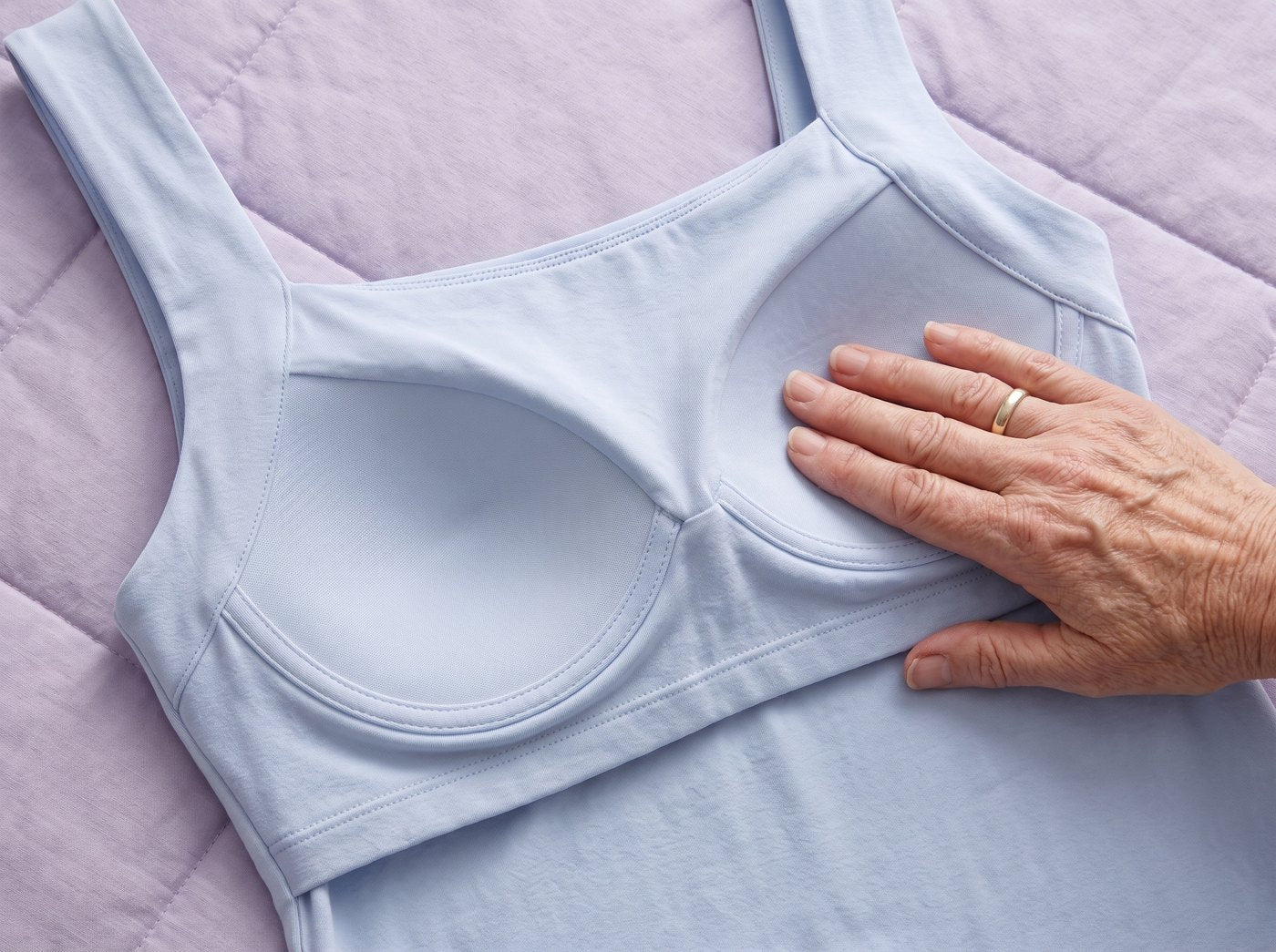
This is the half of the loop most "comfort" tops ignore. Going braless takes the band away, but then the full weight of your chest hangs from your neck and upper back. That pull is where my trapezius flares start.
Inside the tank, shaped cups are sewn permanently into the lining. They don't sit loose in a pocket, so they can't fold or slide out in the wash. They lift and hold you, so your back isn't doing the work.
Wide Straps Spread the Weight Off Two Sore Shoulder Points

A bra strap is about half an inch wide, and it presses the same spot on top of each shoulder all day. Those are two of the tender points my rheumatologist pressed when I was diagnosed.
These straps are as wide as three fingers. The same weight is spread over about four times the skin, and the straps lie flat instead of cutting a groove.
It Pulls On Over Your Head, So Getting Dressed on a Fatigue Day Takes One Movement

On a bad morning, twisting both arms behind my back to find a hook by feel used up energy I needed for the rest of the day. Some days I skipped the bra and skipped going out with it.
The tank goes on like a T-shirt, in one pull. Your arms barely lift. There is nothing to fasten, nothing to adjust, and at night nothing to unhook. It looks like a plain top with a square neckline, so I can open the door or go to the pharmacy in it.
You Can Test It on Your Worst Fibro Day, With 45 Days to Decide

Every woman with fibromyalgia has a drawer of "comfort" bras that were fine in the shop and awful by hour six. So don't judge this on a good day. Wear it through a whole flare day, on the sofa, under a cardigan, all of it.
If it presses anywhere you can't live with, you have 45 days to send it back for your money. Most of us in the group bought more instead.
From the Group
What the Tuesday-night women said after their first month.

"Six weeks in and I haven't put a real bra on once. No red line round my ribs at night, and my shoulders aren't up by my ears."

"The band was always my worst one. This has nothing round the ribs and I still feel held in. I wear it to work under a blouse."

"I tried going braless for a year and my upper back paid for it. This is the first thing that fixed both halves."
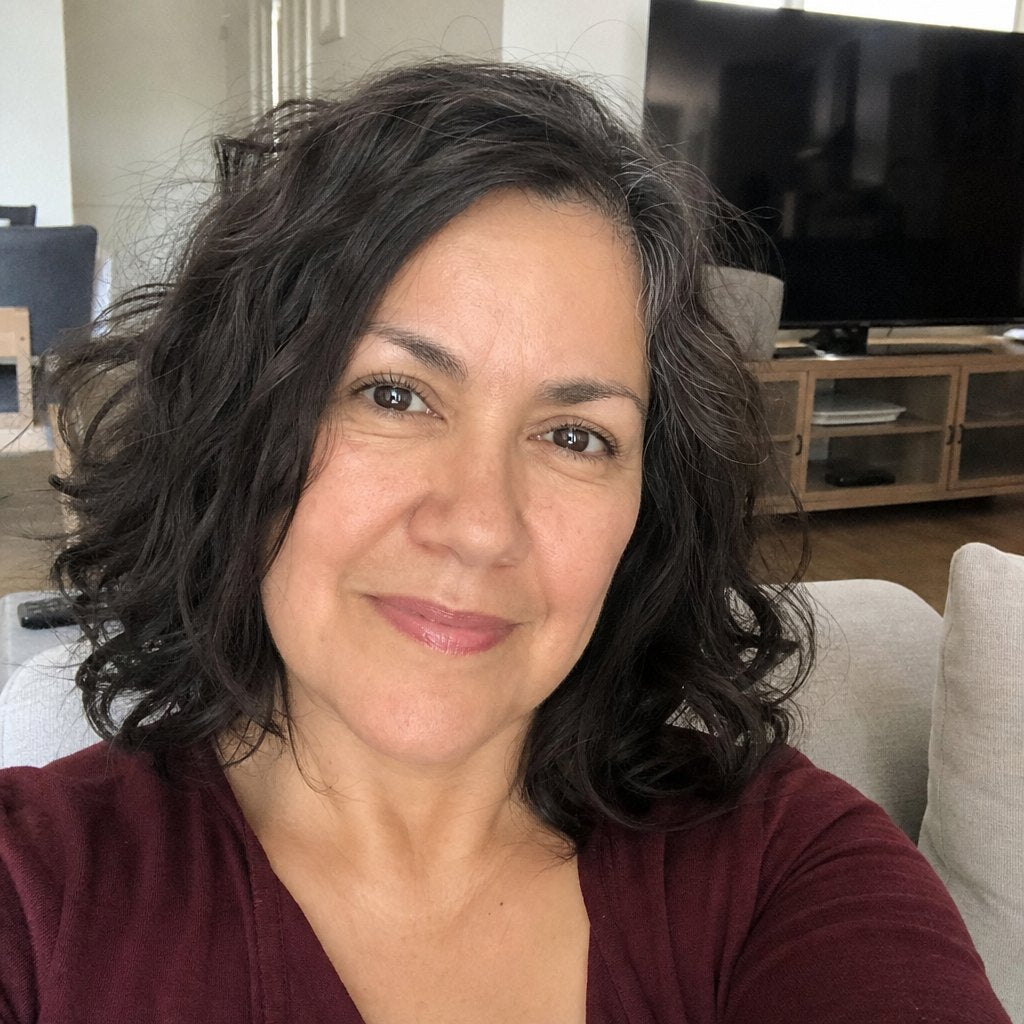
"On a fatigue day I can get it on without help. That alone was worth it to me."

"I was sure something would dig in by evening. Nothing did. I bought the five pack the next week."

The Freeform Tank
- No band round your ribs — the whole tank holds you
- No hooks, clasp or wire — nothing metal on your skin
- Cups sewn into the lining — they can't fold or shift in the wash
- Straps as wide as three fingers — six colours, S to 3XL
What the Group Asks Me Most
Does any part of it press on the ribs?
No. There is no band, so nothing is pulled tight round your ribcage. The tank is fitted, the way a soft T-shirt is fitted, and the hold comes from the sewn-in cups and the wide straps.
What size do I order?
Order by your usual bra size using the chart on the order page, S to 3XL. If you are between two sizes, or your skin is very sensitive that week, take the larger one.
Will the cups come out in the wash?
No. They are sewn into the lining, not tucked into a pocket, so they stay in place and hold their shape wash after wash.
Gentle hugs, and see you Tuesday,
Debbie