
7 Reasons Your UTIs Keep Coming Back After The Antibiotics Are Finished
If you have had three or more UTIs in a year, this is not bad luck and it is not your hygiene. Six of the seven are things you were told to do. The seventh is the one nobody has looked at.


I am a urologist. Twenty years, and I could not put a number on how many women have sat down across from me and said a version of the same sentence.
“It is back again.”
Then, almost always, an apology. She tells me she must be doing something wrong. She has changed her soap, her underwear, her laundry powder. She drinks the juice. She goes straight afterwards, every time, because a nurse told her to twenty years ago and she has not missed once since.
I want to say this as plainly as I can, because she has usually been carrying it for a decade: a recurring pattern is not a hygiene failure. Women who are meticulous get them. Women who are not get them. If scrubbing were the answer, the most careful patients in my clinic would be the ones I never see again, and they are the ones I see most.
Here are the seven things I actually look for. The first five will be familiar and one of them will annoy you. The sixth is the one that is almost never checked, and after twenty years of scoping bladders it is the one I would look at first.
You Wait Until You Are Desperate Before You Go
Nearly every woman I see with a recurring pattern is holding it, and she has a reason. She is with patients, or in a classroom, or on a ward, or in the back of a car on a road she does not control. So she waits. Three hours becomes five.
Two things happen while she waits. Urine that sits gets more concentrated, and concentrated urine is the version that leaves deposit behind on the bladder wall. And a bladder held at capacity for hours at a time stops emptying cleanly when she finally does go — there is always a little left, and what is left is the most concentrated part of it.
The women with the worst patterns in my clinic are almost never the ones with the least willpower. They are nurses, teachers and drivers.
You Finish The Course And Change Nothing Else
This is not an argument against antibiotics. If you have an infection, take them, finish them, and do not let anybody on the internet talk you out of it. They work, and they work fast.
But be clear about what the course actually did. It cleared the urine. Three days in, the sample runs clean. That is the whole job, and it is the job it is designed for.
What it does not do — what it was never built to do — is change the surface of the bladder wall. Whatever was sitting on that wall in February is still sitting there in March. The urine is new. The wall is not. And a woman who is on her fourth course in a year has now had four conversations about the urine and none at all about the wall.

You Are Drinking The Juice Instead Of The Extract
Cranberry is not the problem here, and I want to be careful with this one, because it is genuinely a good ingredient and it has been let down by the form it is sold in.
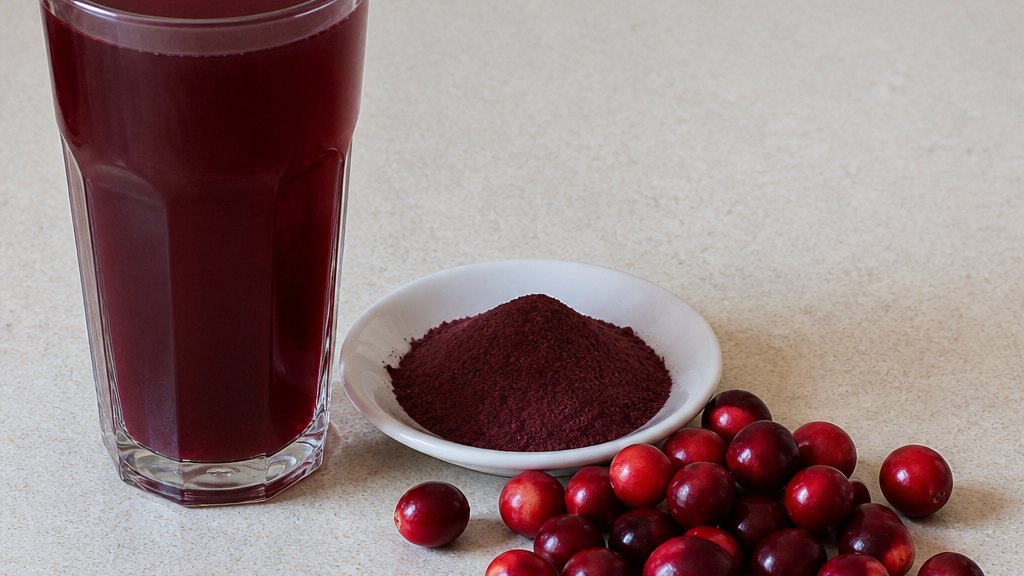
The active fraction in cranberry is a group of compounds called proanthocyanidins. A standardised 30% extract concentrates them. A carton of juice from the supermarket does something close to the opposite: it is mostly water and apple or grape concentrate, it is often under 5% cranberry, and it carries twenty-something grams of sugar per glass to make it drinkable.
So the woman drinking two glasses a day is doing something genuinely worthwhile, at somewhere near a hundredth of the strength she thinks she is, with a sugar load she does not want. She then decides cranberry is not for her. It was never given a fair go.
You Cut Your Water Down Because Going Hurts
This one is completely understandable and it makes everything worse.
When it burns, the last thing you want is another reason to sit down. So the glass by the sink stops getting refilled, and by the afternoon you are running on half of what you were drinking a month ago.
Less water does not mean less trouble. It means the urine you are making is more concentrated, and concentrated urine is more irritating on tissue that is already sore — which is why it burns more on the days you drink least, and why a woman can end up convinced her bladder is getting worse when what changed was the water.
I am not asking you to flood yourself. Volume is not a cure and anyone telling you to drink four litres is not thinking about your evening.
If you already do the four things above, and it still came back this year, then the thing that is keeping the pattern going is not on that list. Numbers five to seven are the ones I would be looking at.
See The Three-Step ProgramYou Have Been Told, For Years, That This Is Something You Did
Now the one I care most about.
Somewhere between the first infection and this one, somebody told you to wipe a particular way. Somebody else told you to change your underwear, change your soap, stop taking baths, empty afterwards, wash before, wash after. Each piece of advice was well meant. Stacked up over fifteen years they add up to a single message, and you have heard it clearly: this happens because of something you are doing.
I have scoped the bladders of women who follow every one of those rules without exception, and women who follow none of them. I cannot tell them apart on the screen. What I can see on the screen is which walls are clean and which are not, and that is not a question of soap.
So put it down. It is not a character flaw and it is not something you brought on yourself, and I would rather you spent that energy on the wall.
Nobody Has Ever Looked At What Is Sitting On Your Bladder Wall
Here is what I see through a scope, and what almost no woman with a recurring pattern has ever been shown.
A healthy bladder wall is pink, wet and even. Put a scope into a bladder that has been going through this for a decade and there is something else on it: a pale, gritty, chalk-coloured film, laid down in layers, adhered to the tissue. Mineral salts and acid crystals that came out of her own urine, one concentrated day at a time, over years.
Two things follow from that, and they are the whole reason I write about it. Deposit like that gives the surface texture where it should be smooth, and a surface with texture is a surface things settle into and stay on. And coated tissue does not stretch — so the wall reports full at a third full, which is the urgency, the frequency, and the trip you make at two in the morning for almost nothing.
Nothing in a course of antibiotics goes near it. Nothing in the advice about soap goes near it. It is simply not on the list of things anyone checks, and it has been there the whole time.

You Have Started To Believe This Is Just How Women Are After 40
This is the one that makes me angry, and not at the patient.
Somewhere around the fourth or fifth episode a woman stops expecting the problem to be solved and starts managing it instead. She keeps a strip of sachets in the glove box. She knows which pharmacy opens on Sunday. She has a GP she can get a prescription from without a full appointment, and she treats that as a small victory rather than what it is.
And when she asks whether anything can actually be done, she is told, kindly, that this is common in women her age. Common is a description. It is not a cause, and it is not a reason to stop looking.
Common is also what I am counting on: this is common precisely because the thing driving it is common, and it is common because nobody looks at it.
So — What Actually Takes The Deposit Off?
Once you accept that the wall is coated, the question changes shape. It stops being how do I get through the next one and becomes how do I get the surface back to what it was.
That is three separate jobs, and they have to happen in order. Stop new deposit adhering. Loosen what has already bonded to the tissue. Settle the irritated lining underneath so it stretches again and stops raising the alarm early.
Do the third without the first two and you have quietened a wall that is still coated. Do the first without the third and you have stopped it getting worse while she still cannot sit through a meeting.
“Most of the bladders I scope are not weak. They are coated. We have spent thirty years treating the signal and almost none of it looking at what the signal is coming off.”
— Dr. Alan Reeves, MD
Here is the sequence, and what each part is actually doing.
CranShield™
Proanthocyanidins at extract strength rather than juice strength, so new mineral and acid deposit has far less to hold on to. Astragalus is here because a lining that is already irritated lays down more, faster.
Sedraclear™
Chanca Piedra translates out of the Spanish as stone breaker, which is what it has been used for along the Amazon for as long as anyone has written it down. Its job here is the crystalline deposit sitting on the wall — loosening the bond so it lifts and leaves in the ordinary way, at the ordinary volume.
UrsiCalm™
Under the deposit is tissue that has been irritated for years and is reporting full long before it is. This is the part that decides whether the day feels different, because a calm lining stretches, and a lining that stretches stops raising the alarm at a third of a bladder.
Every one of those is available on its own, and most of them are cheap. That is not the difficulty. The difficulty is that the three steps have to happen in order and at weights that do something — stop the deposit, lift the deposit, settle the tissue under it — and buying nine bottles to do that is how people give up in week three.
The formulation my team put together is called Rensa. Two capsules, once a day, all three steps at the weights above. It is not a diuretic and it is not a water pill. It is not designed to make you go more. It is designed to take the deposit off the wall so the wall stops reporting full when it isn't.