
“Every Doctor You've Seen Has Been Treating Your Bladder Wrong. Here's What They Should Have Told You.”
If you've been told it's “just your age,” or you've been handed a prescription and a packet of pads and sent home, read this before you spend another dollar.

What I'm about to tell you might cost me my hospital privileges.
I don't care. Someone needs to say it.
My name is Dr. Alan Reeves. I'm a urologist. Twenty years specialising in bladder and lower urinary tract disorders. Over 2,000 patients treated.
I have spent my entire career trying to understand why people lose control of their own bladders — and how to give it back.
These are the conditions I see every week:
- Overactive Bladder (OAB)
- Nocturia — waking to urinate
- Urge Incontinence
- Incomplete Emptying
And I am tired of watching my own profession fail the people who need us most.
Let Me Guess What Happened To You.
You went to your doctor. They prescribed a bladder medication — oxybutynin, maybe, or solifenacin. You took it. Your mouth went dry as paper, your eyes went dry, and you spent three weeks in a mild fog. And you were still getting up at two in the morning.
So maybe you tried the exercises. Someone handed you a photocopied sheet about pelvic floor squeezes and told you to do three sets a day. You did them for a month. Nothing.
Maybe you went further. Cut out coffee. Cut out tea. Cut out wine, tomatoes, citrus, anything on the bladder-irritant list you found online. You stopped drinking water after four in the afternoon and went to bed thirsty.
Maybe you had the ultrasound. The urine culture. Maybe you paid for the urodynamics. Everything came back normal.
Normal. As though the bathroom light isn't the last thing you see every night and the first thing you see at two, and again at four.
Maybe you have started planning your life around it. Where the toilets are. Whether you can sit in the middle of the row. Whether four hours in the car is worth it to see your grandchildren.
And then, maybe the worst part:
A doctor looked you in the eye and said, “Well — you're not twenty-five any more.”
If any of that sounds like your life, listen to me carefully.
You're not old. Your bladder is not worn out. And you are not imagining it.
You were given the wrong explanation for what is happening inside your body. And today, I'm going to give you the right one.
It's Not Age. It's Not A Weak Pelvic Floor. It's A Film Of Sediment Sitting On Your Bladder Wall.
Every doctor you have seen has told you the same three things. Your bladder muscle is overactive. Your pelvic floor has weakened. Your prostate is enlarged, if you're a man, or your oestrogen has dropped, if you're a woman.
They're not completely wrong. But they're missing the piece that matters most.
Those are triggers. They are not the cause.
Here is what nobody put in front of you.
The inside of your bladder is lined with a layer of tissue that has one job: to feel. To stretch as the bladder fills, and to send your brain a single honest message when it is genuinely full.
Over the years, minerals and acid residue in your urine begin to settle onto that lining and stay there. A thin film at first. Then a crust. Researchers have started calling it Bladder Sludge.


A coated lining cannot stretch properly. And a lining that cannot stretch cannot tell the difference between a bladder that is full and a bladder that is barely a third of the way there.
So it does the only thing it can. It fires the alarm early. Then it fires it again twenty minutes later. Then it wakes you at two, and again at four, over a bladder that had nothing much in it either time.
Your bladder is not failing you. It is being lied to by its own lining.
“Most of my patients don't have a weak bladder. They have a coated one. We have spent thirty years drugging the nerve and nobody thought to look at what the nerve was sitting under.”
— Dr. Alan Reeves, MD
You Have Already Seen Exactly What This Looks Like
Go and look inside your kettle.
When it was new, the element was bright and bare, and the water came to the boil quickly and quietly. Now there is a chalky grey-white crust over everything. It didn't arrive overnight. It came a few molecules at a time, every day, for years, out of perfectly ordinary water.
You never noticed it happening. You noticed the result — the kettle takes longer, it rattles, and there are flecks in your tea.
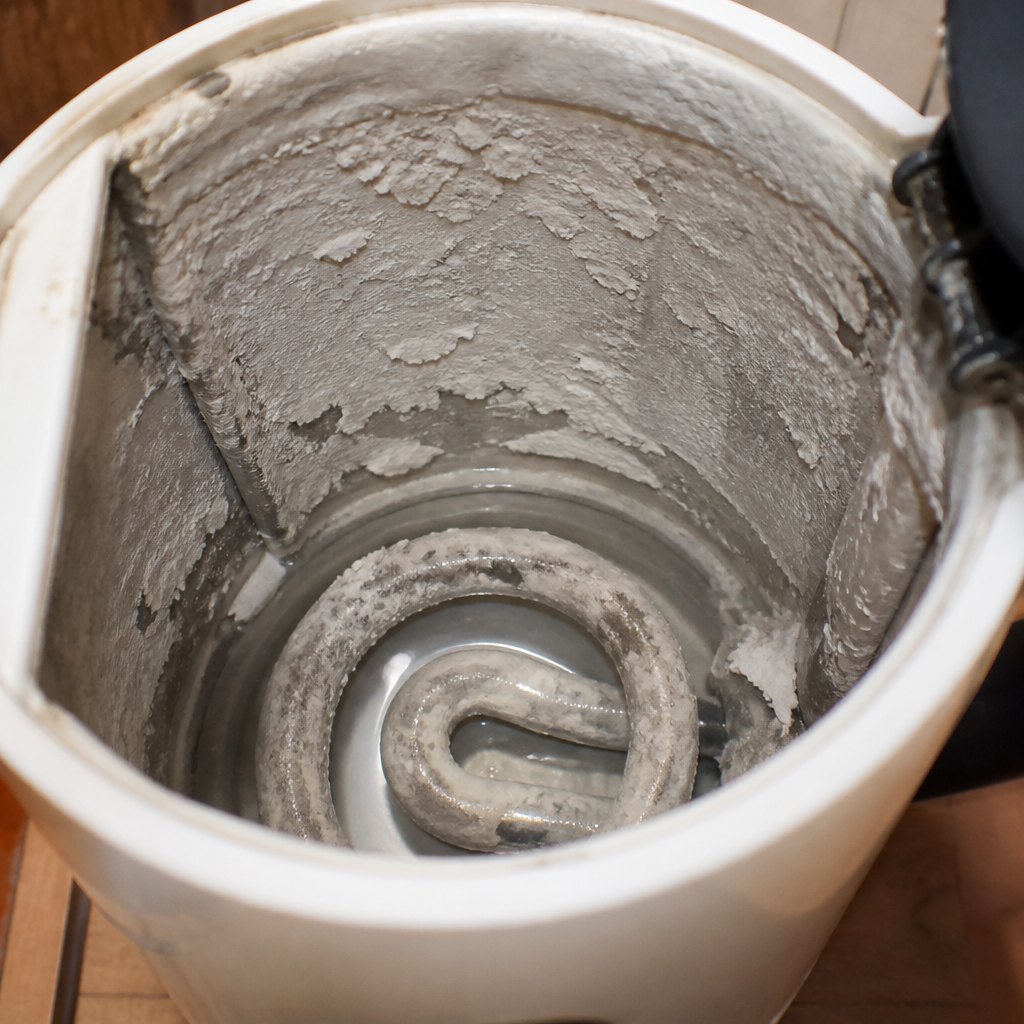
Your bladder holds considerably more mineral-laden fluid than your kettle does, for considerably longer, at body temperature, every single day of your life.
Nobody has ever suggested descaling it.
That is the entire blind spot. We treat the nerve that is shouting. We have never once treated the crust it is shouting through.
When Bladder Sludge Takes Over, Your Whole Life Quietly Shrinks
Here is what my patients actually tell me, once they trust me enough to say it out loud.
- They stopped drinking water after four in the afternoon — and have been mildly dehydrated for years because of it.
- They take the aisle seat at church, at the theatre, on the plane. Every time. Without discussing it.
- They turned down the trip. The coach tour, the drive to see the grandchildren, the weekend away.
- They have not slept a full night in so long they have stopped describing themselves as tired. It is just how they are now.
- They keep a spare set of underwear in the car and have never told anyone.
Not one of those is a medical symptom. You will not find them on any chart. They are what a person quietly gives up, one at a time, over about a decade — and by the end the world has closed in to the size of a house with a bathroom they can reach in fifteen seconds.
That is what I am angry about. Not the condition. The surrender.
What Actually Lifts Bladder Sludge Off The Wall
Once I understood what I was looking at, the question stopped being “how do I quieten this bladder down” and became “how do I get the sediment off the lining.”
That turned out to be a question with a four-hundred-year-old answer, sitting in the European botanical literature, largely untranslated and almost entirely ignored by modern urology.
It takes three things, in this order.
CranShield™
Cranberry's real job was never fighting infection. Its proanthocyanidins coat the bladder wall so mineral residue cannot get a grip on it in the first place. The cranberry capsules on a pharmacy shelf are mostly dried juice powder at a token dose. This is a 200 mg standardised 30% extract, with astragalus root supporting the filtration upstream so less sediment ever reaches the bladder.
Sedraclear™
Chanca Piedra translates from the Portuguese as stone breaker, and South American physicians have used it for precisely that for centuries. It shifts the pH at the bladder wall so the crystal film loosens off the tissue instead of hardening onto it. Horsetail and java tea then carry the loosened residue clear before it can settle again. This is the step every cranberry-only pill on the market skips entirely.
UrsiCalm™
Lift a decade of sediment and you expose tissue that has been irritated the whole time. Uva ursi and buchu leaf are the two herbs European physicians have relied on for the urinary tract since the seventeenth century; goldenrod and stinging nettle bring down the swelling at the bladder neck that makes emptying feel incomplete. This is the part that stops the false alarms.
Individually, every one of those is available and most of them are cheap. That is not the point, and it is why I stopped telling patients to go and assemble it themselves.
A cranberry capsule on its own stops new residue sticking and does absolutely nothing about the ten years already on the wall. Break the sediment loose without calming the lining and you irritate tissue that was already raw. The three steps only work as three steps, at these weights, in this order.
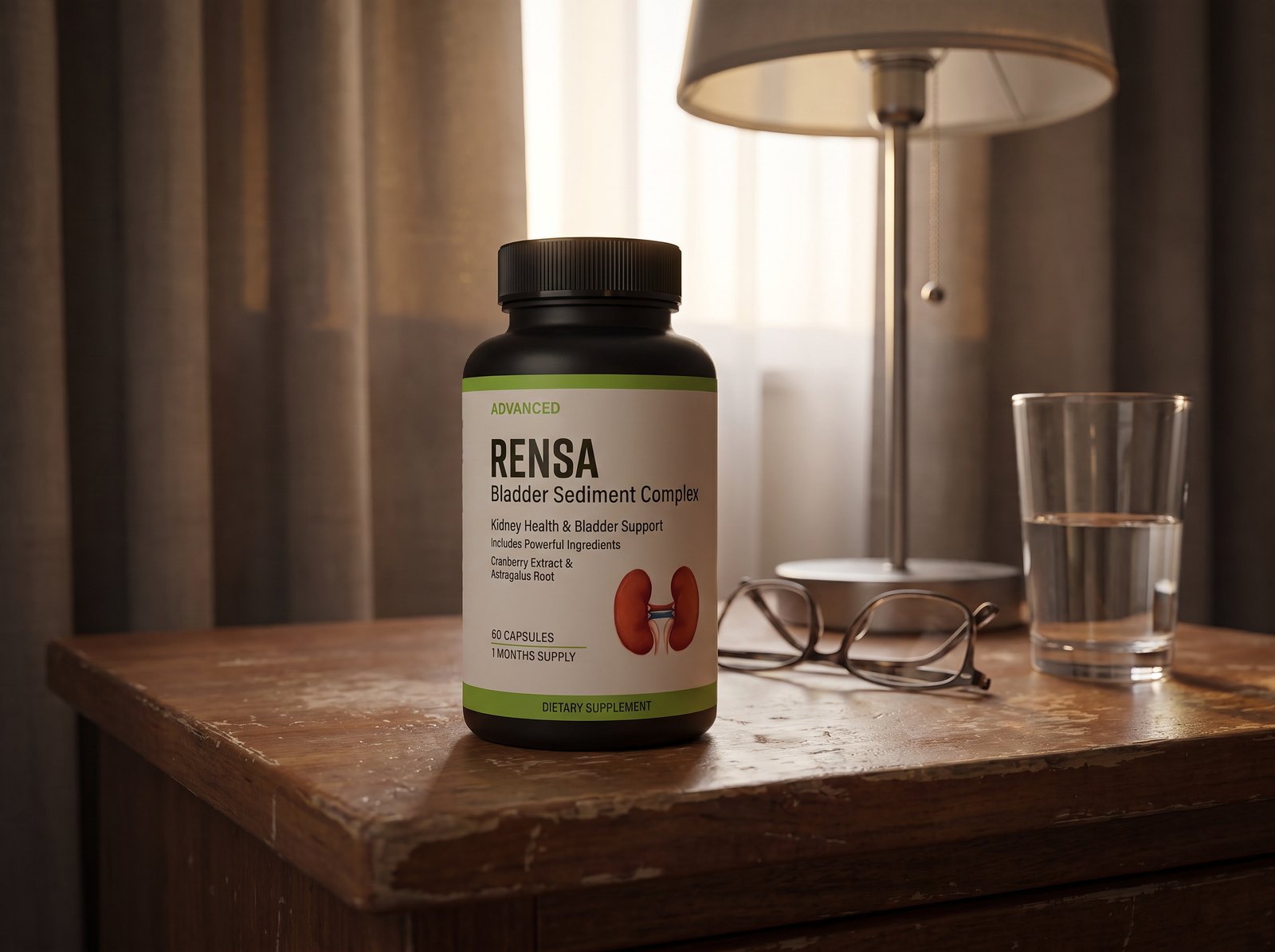
So we put all three into a single formula. It is called Rensa. Two capsules each morning, and that is the whole routine.
I am not going to tell you this will change your life, because I have been a doctor for twenty years and I don't talk like that.
I will tell you this. The people who get their nights back are, almost without exception, the ones who stopped waiting to see whether it got better on its own.
It does not get better on its own. Sediment does not un-settle.