
“In 34 Years On The Ward, I Watched Hundreds Of Women Quietly Give Up Their Own Lives Over This. Nobody Ever Told Them The Real Reason.”
If you have stopped booking the seat you actually wanted, if there is a spare pair of underwear in your handbag your husband has never seen, if you cancelled a trip and told nobody the real reason - this is for you. I could not say any of this while I was on the wards. I have retired, and I can say it now.


My name is Margaret Ellis. I am a retired nurse.
I spent thirty-four years on urology and geriatric wards, and for most of that time I was not allowed to answer the question I was asked most. A woman would take my hand on the way out of a follow-up, and ask me the one thing she had not been able to ask the specialist. And I would have to smile, and tell her to raise it at her next appointment, and both of us would know she was not going to.
I retired last year. I now teach a small group of nurses at a lab called Bayside, and part of what I signed up for was permission to finally say - in plain language, without a specialist looking over my shoulder - what I saw on those wards.
This is the first thing on the list.
The specialist walks in for eleven minutes. He orders the scan, he writes the prescription, and he walks back out. The nurse is the one who is still in the room after he closes the door.
Which means the nurse is the one who hears what the patient never told the specialist. What she has actually stopped doing. What she is embarrassed about. What she is worried about but was afraid would sound silly.
Over thirty-four years, that is a great deal of information nobody ever wrote down. I want to give some of it back.
- Women in their sixties and seventies who had been told, verbatim, that it was “just your age”
- The same women coming back a year later, worse, having done all the pelvic floor exercises without complaint
- Full urology work-ups that came back clean while the patient was clearly living around her bladder
- Prescriptions handed over for a bladder muscle that, in most of these cases, was not the actual problem
- A photocopied pelvic floor sheet, given out at the door, as the entire follow-up plan
I am not blaming the specialists. Most of them are working eleven minutes at a time and are looking for the thing on the form. What I am saying is that in thirty-four years I watched several thousand of those consultations, and there was a piece missing from almost every one of them.
Three People I Have Never Stopped Thinking About
These are three patients whose names I have changed and whose details I have blurred. I have kept the parts that matter, because the parts that matter are the ones you will recognise. If any of them sound like you, keep reading - the second half of this article is what nobody said to them, and what I would say to you now.
He told me, on the third afternoon, that he had stopped drinking water after three o'clock. He said it the way a man confesses to a small crime. He had been mildly dehydrated for something like eight years and had never once mentioned it to the specialist, because the specialist had never asked.
He was up four times a night anyway.
She kept a spare pair of underwear folded very small in the inside pocket of her handbag. She told me because I sat down next to her rather than across from her, and because I was a woman closer to her age than the doctor was.
Her husband, she said, had never known. Not in forty-one years. She had not been sure she was going to tell me either, and then she did.
He had a plane ticket to fly to Adelaide for the birth of his first grandchild. He cancelled it the week before. He told the family it was his back.
It was not his back. He could not sit down for four hours without knowing where the toilet was on the aircraft, and he did not want the row he was in to know he had to get up twice. So a first grandchild was born, and a grandfather did not meet her until she was four months old.
That is the one I have never stopped being angry about.
None of those three had anything wrong with them that the tests could see. Every scan and every panel came back normal. The specialists were, on their own terms, being honest.
But three people were quietly rearranging the shape of their lives around a problem, and nobody was giving them the piece of information that would have let them do something about it.
I Stopped Asking Why They Did Not Get Better. I Started Asking What Was Missing From The Discharge Summary.
Around year eighteen I got quietly frustrated with the pattern.
The same women came back. Same complaints, sometimes with a second prescription written on top of the first, and no more slept than the year before. And every time, the discharge notes read the same way. Bladder muscle overactive. Pelvic floor deconditioning. Advise fluid restriction, advise pad management, review in twelve months.
None of that was untrue. All of it was pointing at the wrong thing.
So on my own time - because a ward nurse does not get research hours - I started reading the older bladder literature. Nineteenth-century clinical notes. Continental European studies from the 1950s and 60s that never got translated properly. Two textbooks on urinary sediment that had gone out of print by 1974 and that I found through a medical librarian who owed me a favour.
What I kept coming back to was one word that almost nobody in modern urology uses any more, because there is no drug company selling anything for it.
The Word Is Sediment. On A Bladder Wall, It Is Now Being Called Bladder Sludge.
The inside of your bladder is lined with a very particular kind of tissue. Its whole job is to stretch, and to tell your brain - once, honestly - when the bladder is genuinely full.
Every day of your life, some of the minerals dissolved in your urine settle out of the fluid and onto that lining. A few molecules at a time. Not much. But it never leaves - the body has no mechanism for scraping it back off - and over forty or fifty years those few molecules a day become a thin, hard, chalky film.
Researchers are now calling that film Bladder Sludge.
A coated lining cannot stretch properly. A lining that cannot stretch cannot tell your brain the difference between a bladder that is genuinely full and a bladder that is a third of the way there. So it does the only thing it can do. It fires the alarm early. Then it fires it again twenty minutes later. Then it wakes you at two, and again at four, over a bladder that had almost nothing in it either time.
Your bladder is not weak. It is not worn out. It is being lied to by its own lining.


This is the piece the discharge summary is missing. When I finally saw it in writing - in a translated German textbook from 1963, of all places - I remember standing in the medical library and feeling a small quiet fury at how much of my working life had been spent watching people be given the wrong explanation for it.
You Have Actually Seen Exactly What This Looks Like. You Just Have Not Made The Connection.
I want you to do something for me. Go into your kitchen and lift the lid of your kettle. I will wait.
When you bought that kettle, the element was bright and bare, and the water came to the boil quickly. It is not like that now. There is a chalky, grey-white crust across the bottom of it, and probably up the sides. It did not arrive overnight. It came a molecule at a time, out of ordinary tap water, for years.
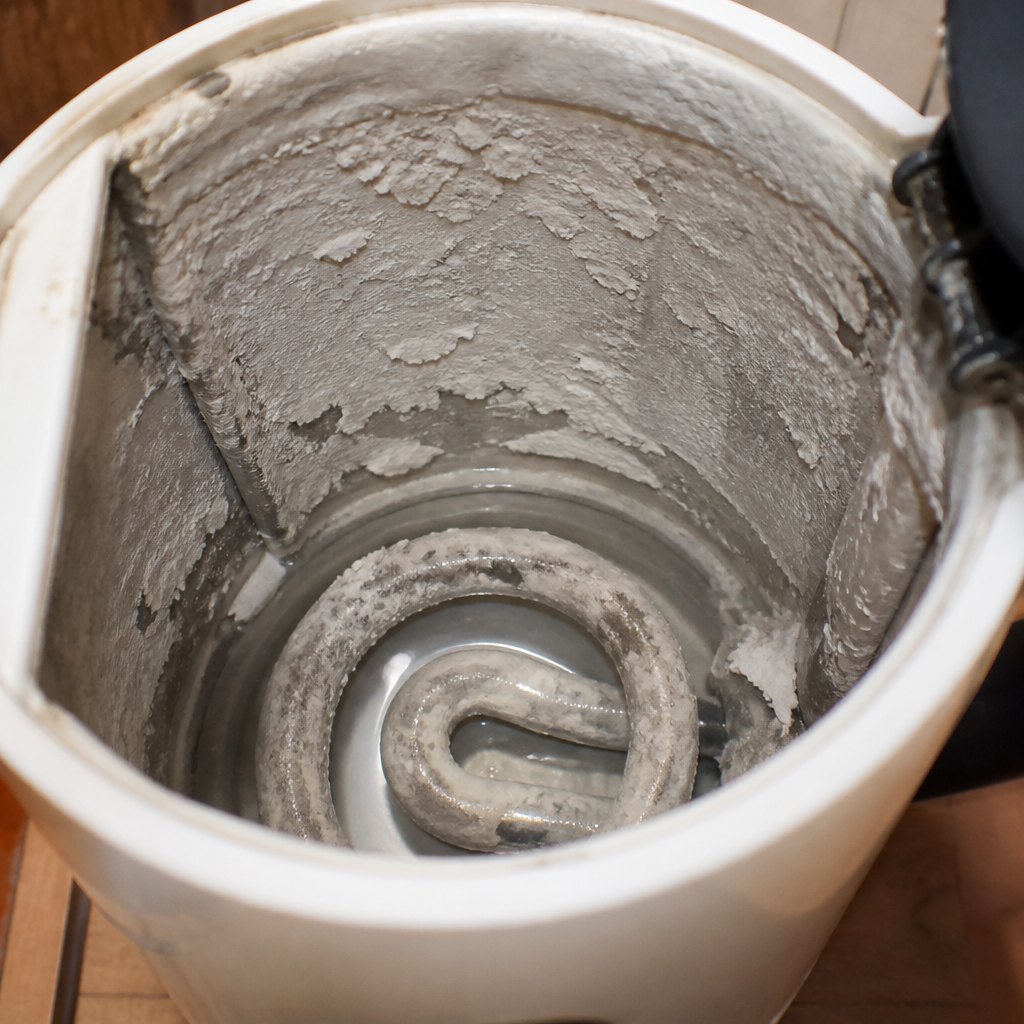
Nobody thinks that kettle is old. Nobody suggests it should accept its limitations. They descale it, and it works again.
Now. Your bladder holds considerably more mineral-heavy fluid than that kettle does, for considerably longer, at body temperature, every single day of your life for sixty or seventy years.
In thirty-four years on the ward, I never once heard anyone suggest that anything could be done about the crust building up on the inside of it. Not once. That is the blind spot. We treat the nerve that is shouting. We have never once treated the crust it is shouting through.
“In thirty-four years I watched thousands of women be handed a prescription for a bladder muscle that was not the actual problem. The problem was on the inside of the wall, and nobody was looking there.”
- Margaret Ellis, RN (Ret.), 34 years urology & geriatric ward
The Three Things I Would Have Added To Every Discharge Summary I Ever Handed Over, If I Had Been The One Allowed To Write It
Once you see the problem as a coating rather than a weakness, the answer stops being mysterious. It takes three things, in a particular order, and almost every bladder product on a pharmacy shelf does one of them and stops.
These are the three I would have written in, at these weights, in this order.
CranShield™
Cranberry's real job in the bladder has almost nothing to do with infection. Its proanthocyanidins coat the wall so mineral residue cannot get a grip on it in the first place. The pharmacy-shelf cranberry capsule is mostly dried juice powder at a token dose - it is prevention wearing the word cranberry, and it does not do this. Two hundred milligrams of a 30% standardised extract, with astragalus root supporting the filtration upstream so less sediment ever reaches the bladder, is what this step actually looks like.
Sedraclear™
Chanca piedra translates from the Portuguese as stone breaker, and South American physicians have used it for exactly that for several hundred years. It shifts the chemistry at the bladder wall so the crystal film loosens off the tissue instead of hardening onto it. Horsetail and java tea then carry the loosened residue clear before it can settle again. This is the step every cranberry-only pill on the market skips entirely.
UrsiCalm™
Lift a decade of sediment off a bladder wall and you expose tissue that has been irritated the whole time it was under there. Uva ursi and buchu leaf are the two herbs European physicians have relied on for the urinary tract since the seventeenth century - I am not making the tradition up, I am pointing at where it always was. Goldenrod and stinging nettle bring down the swelling at the bladder neck that makes emptying feel incomplete. This is the part that stops the false alarms.
Each one of those, on its own, you can buy anywhere. That is not the point. A cranberry capsule taken by itself stops new residue sticking and does nothing about the years of it already on the wall. Break the sediment loose without calming the lining and you irritate tissue that was already raw. The three steps only work as three steps, at these weights, in this order.
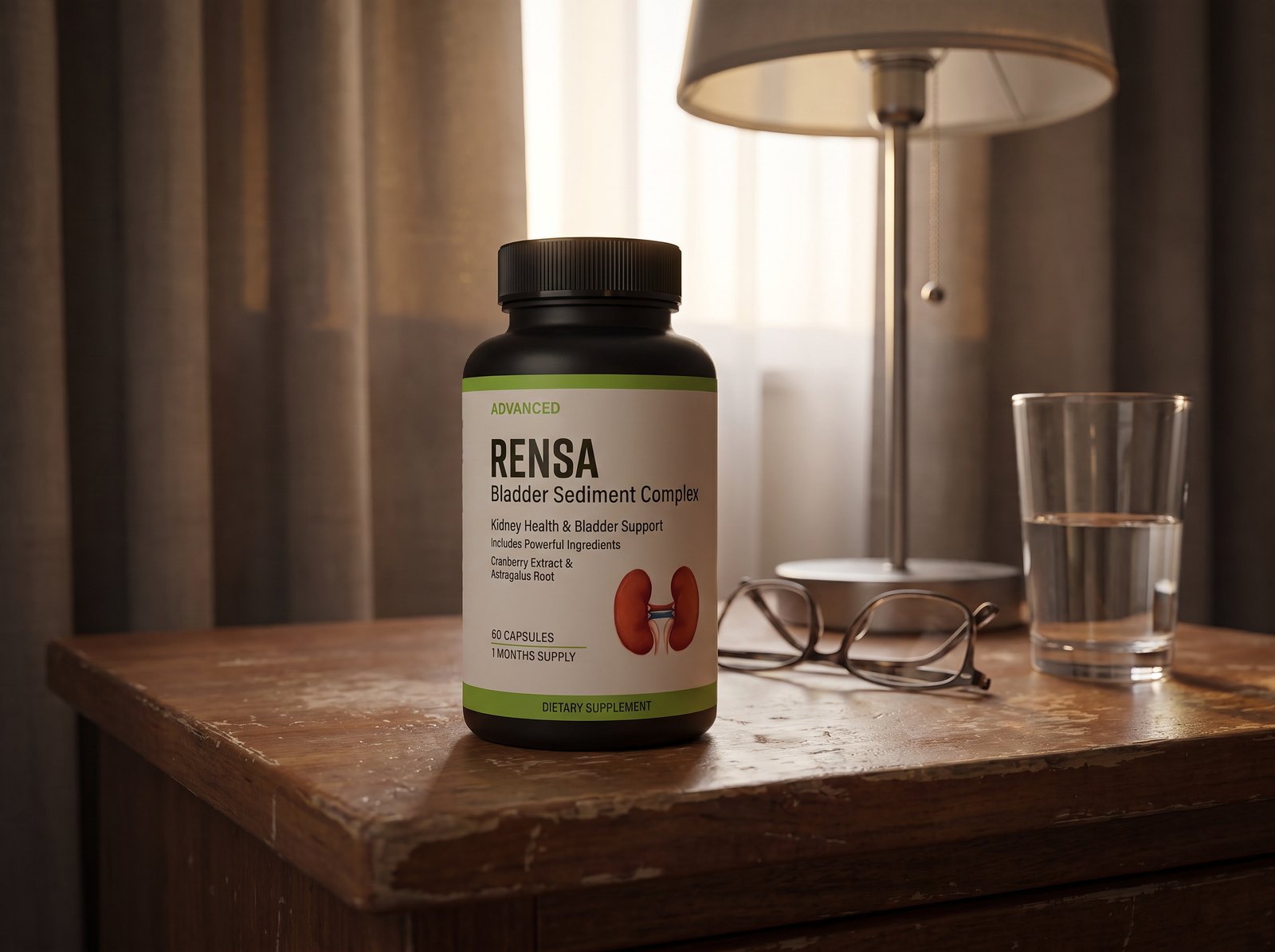
So somebody finally put all three into one formula. It is called Rensa. Two capsules with breakfast, and that is the whole routine - which, for a woman in her seventies who is already taking half a dozen tablets in the morning, is the difference between something she will actually do and something she will not.
What I Would Tell My Own Mother If She Were Sitting Across From Me Right Now
My mother lived to eighty-nine. She was up four and five times a night for the last fifteen years of her life, and she never once complained about it - she was that generation. She used to say it was a nuisance, in the same tone as she would say the weather was a nuisance, as if both were things one had no say in.
I would sit her down now, and I would say three things.
The first: it is not your age, Mum. Sixty-five is not old. Seventy-five is not old. There are women I nursed at ninety who slept better than you do.
The second: nobody at the surgery is going to bring this up, because they are looking for the thing on the form, and the thing on the form does not include this. So you have to bring it up. Or, if you have already brought it up and been told it is your age, you have to stop taking that for an answer.
The third: try this for ninety days. If nothing changes, send it back - the manufacturer takes it back for a full year, no argument. You will not know until you try, and thirty-four years on a ward has taught me that the ones who get their nights back are, almost without exception, the women who stopped waiting to see whether it would fix itself.
It does not fix itself. Sediment does not un-settle.
I am not going to tell you it will change your life, because I spent thirty-four years on a ward and I do not talk like that. Nurses do not.
What I will tell you is that in that time I have watched a great many women rearrange their lives, quietly, one small thing at a time, around a problem that was never what they had been told it was. If nobody has said this to you before - it is not your age, it is not your muscle, and it is not something you have to accept - then I am glad I have been able to say it now, in a way I could not have while I was still on the ward.
The rest is up to you. But please do not spend another decade sitting on the aisle seat because someone told you that was the deal.