My Husband Got Up Four Times A Night For Six Years. I Want To Tell You What It Cost Us.
Two doctors, four supplements and about eleven hundred dollars. We slept in separate rooms for two of those years and neither of us ever said why. Last March I read something that changed it, and I am still angry nobody told us sooner.


My husband would be mortified that I am writing this, so I have not told him. Ray is sixty-nine. He worked thirty-one years at a parts distributor and he has never once complained about anything in his life, which is most of the problem.
For six years he got up in the night. It started at one trip and it finished at four, and in between it took our sleep, our bedroom, a holiday we had been planning since 2019, and about eleven hundred dollars of our money.
None of the people we paid ever told us what was actually wrong. I am going to write it all down in order, because I have read a hundred of these articles over six years and not one of them was written by the person doing the worrying.
It started with one trip, and we both thought it was funny
He retired in the March. By about the June he was getting up once in the night, and we made jokes about it, the way you do. Old man's bladder. Too much tea. He is a big man and he has always drunk a lot of coffee, so we had an explanation ready and we never questioned it.
I want to be honest about this part, because I think a lot of people are where we were in 2020 and do not know it. One trip a night does not feel like a problem. It feels like a fact about getting older. That is exactly why it gets to be six years.
Two trips a night, and the first doctor
By the following spring it was twice, most nights. He went to our family doctor, who sent him for the prostate test. It came back normal. He was pleased about that, and so was I, and neither of us noticed that nothing had actually been explained.
The doctor said the sentence. I have since learned that almost every man over sixty in America has had this sentence said to him by somebody he was paying: “Well, you are not twenty-five any more.”
Ray came home and repeated that to me like it was a diagnosis. He was so relieved it was not cancer that he did not notice he had been sent away with nothing.
The year we bought everything
This is the year I started buying things. Saw palmetto, because that is what the internet says for a man. Pumpkin seed oil. Then cranberry capsules, which a woman at church swore by. Then the bladder tablets from behind the pharmacy counter, which worked for about five weeks and gave him a mouth so dry he could not sleep for that instead.
He took all of it. He never said it was not working. I would find the bottles half full at the back of the cabinet in the spring and I would not say anything either, and that is a thing I regret.
The year I moved into the spare room
I am going to be plain about this because I think it is the part nobody writes down.
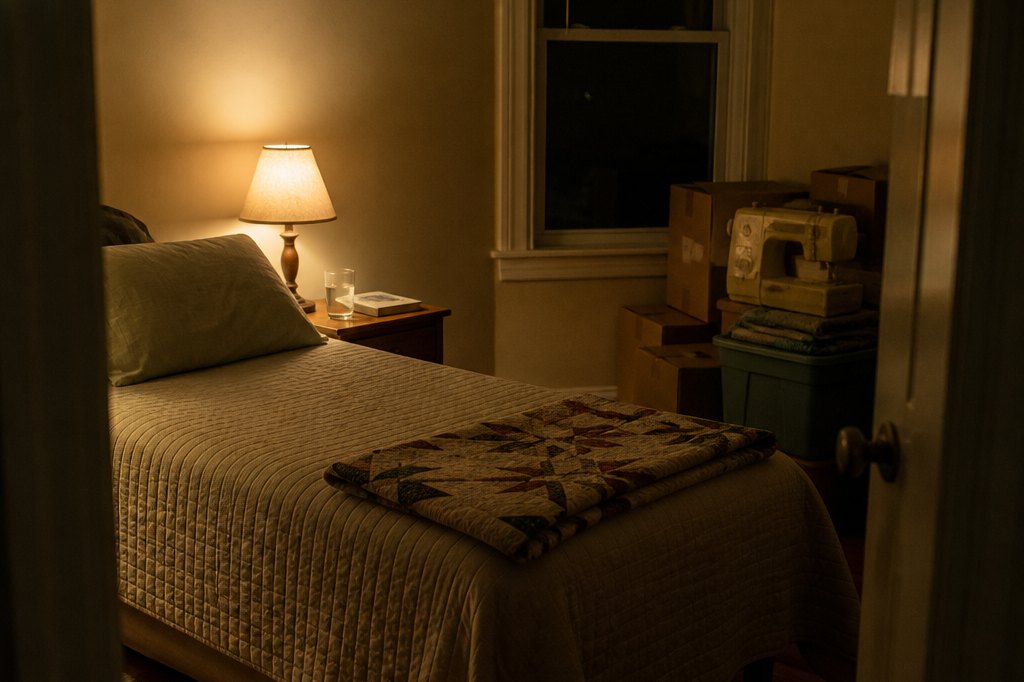
Four times a night. The light in the hall, the door, the floorboard by the wardrobe, the flush, and then twenty minutes of him lying there rigid trying not to move so he would not wake me again. I was getting maybe four hours. In the March I made up the bed in the spare room and I told him it was because of my hip.
It was not because of my hip. We slept in separate rooms for two years and three months and we never once, in all that time, had a conversation about why. He thought I was disgusted with him. I found that out this year. I was not disgusted with him. I was exhausted, and I was frightened, and I could not work out how to say either of those without it sounding like a complaint about a man who had done nothing wrong.
The trip we did not take
Our daughter is in Seattle. We had been saying since before he retired that we would drive it — take three weeks, go the long way, see the parks. It was the thing he talked about.
In the April he sat down with the road atlas and I watched him do something that broke my heart a bit. He was not planning the route. He was working out where the rest stops were. Marking them. Counting the gaps between them.
Two weeks later he said, quite cheerfully, that maybe we would just fly out for a long weekend instead. We did not go at all. He never said the real reason and I never made him.

The article I read at half past five in the morning
I was up early, as usual by then, and I read an article by a urologist named Alan Reeves. He has been doing it twenty years. What he wrote was not what anybody had ever said to us, and I read it three times.
He said that a bladder waking a man four times a night is usually not a weak bladder at all. He said it is a coated one — that there is a film of mineral sediment that builds up on the lining over the years, out of ordinary urine, the same way scale builds up inside a kettle. And a lining with a crust on it cannot stretch, so it sends the message that you are full when you are not.
I sat at the kitchen table and I thought: six years, two doctors, and not one of them looked at the bladder. They all looked at his prostate, found nothing, and sent him home.
I ordered it that morning and I did not tell him what it was. I put it on the counter next to his keys with his blood pressure tablets.
Where we actually are
I am not going to tell you he was fixed in a week, because he was not, and I would not believe that article either.
The first fortnight, honestly, not a lot. Somewhere in the third or fourth week it went from four to three, and I only noticed because I slept through. By about week seven it was one, most nights. Some nights none. He mentioned it himself, in the car, like it was nothing — “I slept through again.”
He has been on it since March. I moved back into our room in April. We told our daughter we are driving out in October and he has the atlas out again, and this time he is marking the parks.
| What we tried | What it cost | What happened |
|---|---|---|
| Prostate supplement, saw palmetto (14 months) | $392 | No change at all |
| Cranberry capsules (8 months) | $214 | Helped a little, then stopped |
| Bladder tablets from the pharmacy (5 months) | $167 | Five good weeks, then a dry mouth |
| Cutting off all fluids after 4pm | Free | Made it worse, not better |
| Pelvic floor exercises from a leaflet | Free | He did them for three weeks |
| A second urologist, private | $340 | The same answer as the first one |
| Six years of it | $1,113 | Still four trips a night |
| What actually worked | See today's price | One trip most nights. Some nights none. |
Eleven hundred dollars is not the number that bothers me. Six years is the number that bothers me. Every one of those things on that list was a reasonable thing to try, recommended by a reasonable person, and every one of them was aimed at something that was not the problem.
If any of that list is in your cupboard right now, this is the thing I wish somebody had put in front of me in 2021.
See What We Finally Bought →What The Article Actually Said
I am not a medical person. I am going to tell you what he wrote as plainly as I understood it, and you can go and read him yourself.
He said: go and look inside your kettle.
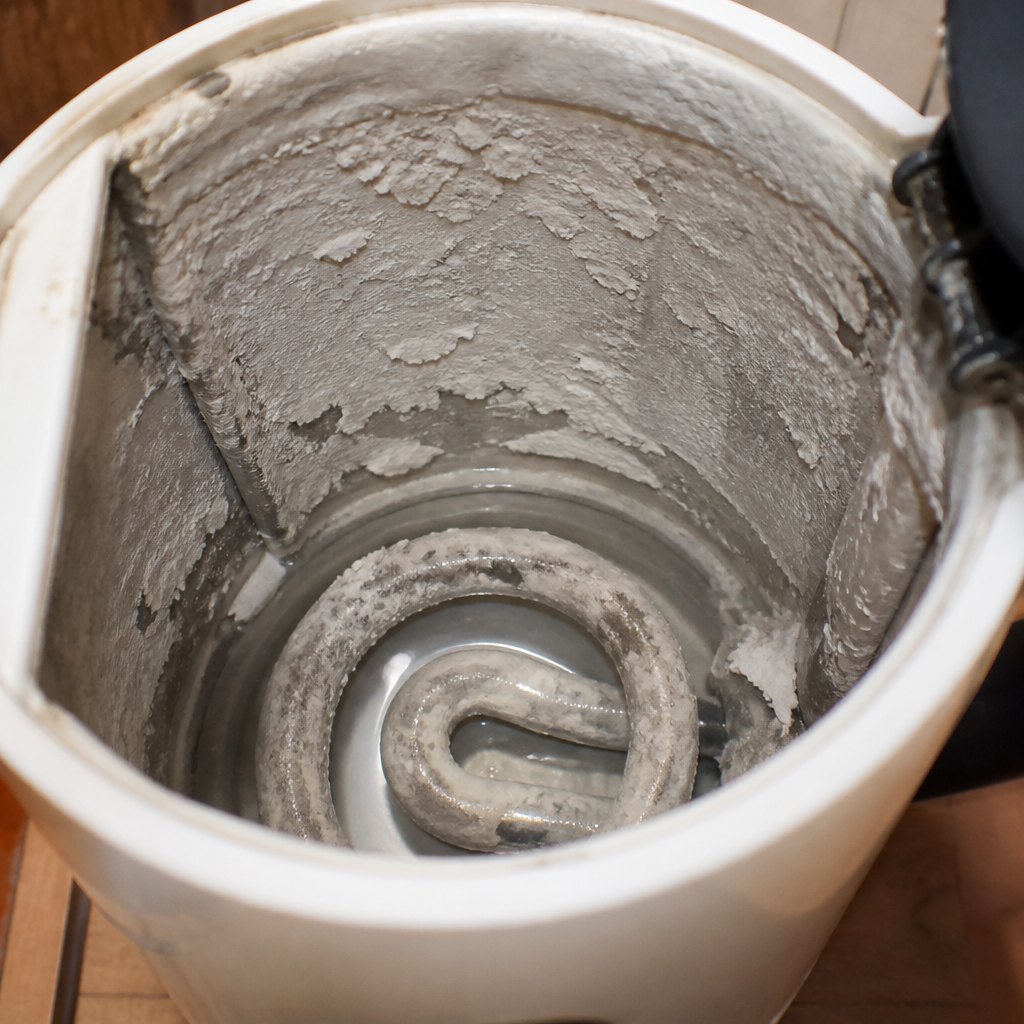
When it was new that element was bright and bare. Now there is a chalky grey crust over everything, and it did not arrive overnight. It came a few specks at a time, every day, for years, out of perfectly ordinary tap water.
His point was that a bladder holds a great deal more mineral-heavy fluid than a kettle does, for a great deal longer, at body temperature, every single day of your life — and nobody has ever once suggested descaling it. He calls what builds up Bladder Sludge. A lining with that on it cannot stretch properly, and a lining that cannot stretch sends the full signal early.
That was the bit that undid me. Ray's bladder was not worn out and it was not weak. It was being lied to.
“Most of my patients do not have a weak bladder. They have a coated one. We have spent thirty years drugging the nerve and nobody thought to look at what the nerve was sitting under.”
— Dr. Alan Reeves, MD, urology
He said getting it off takes three things and that they have to happen in order, which is why, he reckons, so many people try one supplement, get a bit of a result, and give up. Here is how I understood the three, in my words.
CranShield
This is the cranberry part, and I want to be fair about it because I bought cranberry capsules for eight months and I do not think I wasted my money. Cranberry genuinely does this job. What he explained is that it only does THIS job — it stops new residue getting a grip, and it does nothing whatsoever about what is already sitting on the wall. There is a proper standardised dose of it in here, several times what was in the ones I was buying, with astragalus root alongside it.
Sedraclear
This is the step that is missing from everything else, and it is the reason the cranberry stopped helping after a month. There is a South American plant in it called chanca piedra, which apparently translates as stone breaker, and it has been used for exactly this for centuries. It changes the conditions at the bladder wall so the crust comes away instead of hardening on. Horsetail goes with it to carry what comes loose out of the way.
UrsiCalm
He was quite firm that you do not do the second one without this. Lift years of sediment off tissue that has been sore underneath the whole time and the first fortnight can feel worse before it feels better, which is exactly when people give up. Uva ursi and buchu leaf are the old European ones for this. Goldenrod and nettle bring down the swelling at the neck of the bladder that makes it feel like you have not finished.
All three of those in one bottle, two capsules of a morning. It is called Rensa and that is the whole routine — there is no schedule to keep and nothing to remember at night.
One more thing, because it is what I checked first and I suspect it is what you will check first too. It is not a water pill. I had already been caught by one of those — a flush tea that did nothing but send him to the bathroom more often, which is the last thing on earth we needed. This is the opposite. Anything it moves, it moves so that it stops sitting there. Ray goes less, not more.
What I Would Say To You
If you are a woman reading this at half past five in the morning because you are up anyway: order it and put it on the counter. Do not make a thing of it. Ray would never have bought this himself, not because he did not want to sleep, but because buying it would have meant saying out loud that there was something wrong, and he has never in forty-one years been able to do that.
If you are the man and you have found this yourself: you are not old and your bladder is not worn out. A perfectly healthy seventy-year-old bladder does not wake its owner four times a night. If yours does, something is on the lining of it, and it is not what your prostate test was looking for.
Six years is what it cost us. It did not need to cost six weeks.