We Put The 5 Things You Get Offered For An Overactive Bladder Through The Same 90-Day Test
44 adults over 55, every one of them handed a bladder tablet at some point in the last two years. Nobody was asked to stop or change a prescription. We scored all five against the same four jobs — including the two the tablet was never built to do.
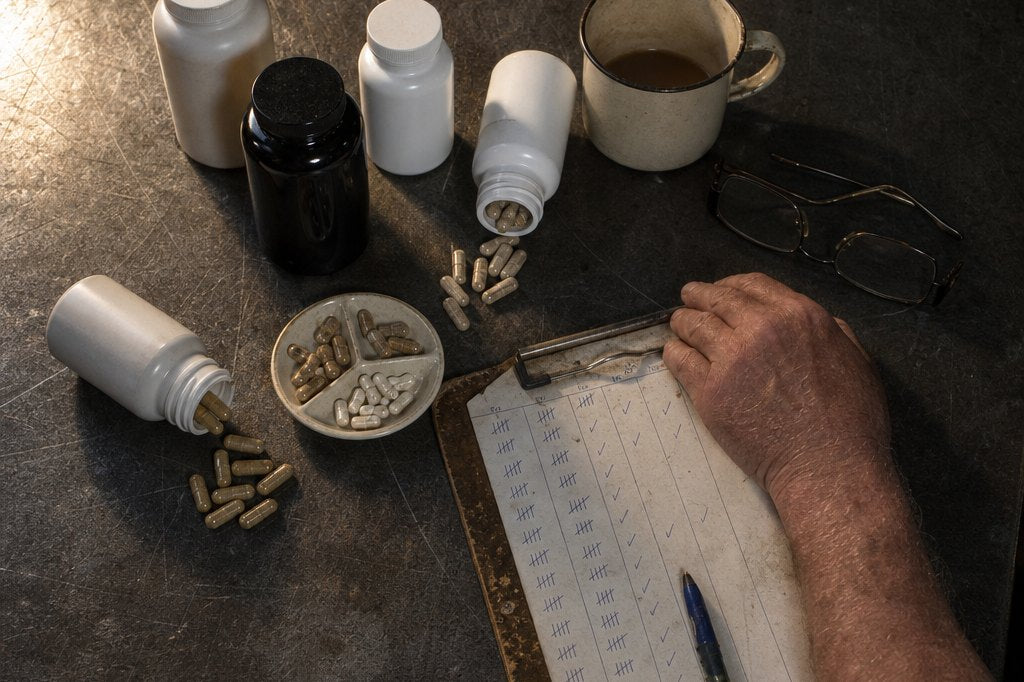

The appointment goes the same way almost every time. You describe getting up twice a night and rushing to the bathroom by day. The ultrasound and the urine culture come back normal. And you leave with three things: a prescription for an overactive bladder tablet, a photocopied sheet of pelvic floor exercises, and — said kindly, almost in passing — a suggestion about pads.
Every one of our 44 participants had been through that appointment. Most had spent the year or two afterwards adding things to it themselves: cranberry in three forms, a water balance tea, a box of sachets off the pharmacy shelf. Not one of them had ever been told what job the thing in their hand was supposed to be doing.
So we scored all five against the same four questions for 90 days. The tablet is on the list because it is the first thing most people over 55 are offered and the only one nobody had ever compared to anything. Everybody prescribed one kept taking it, and nothing below is a reason not to.
- Products tested
- 5, bought at retail. No samples accepted and no manufacturer was told a test was running
- Duration
- 90 days, one product per participant
- Participants
- 44 adults aged 55 to 74, every one of them offered an overactive bladder tablet in the past two years
- Primary measure
- Night-time trips and daytime urgency, self-recorded every evening
- Secondary measures
- Dry mouth, dry eyes, mental fog, incomplete emptying
- Prescriptions
- Nobody was asked to start, stop or change a medication for this test. The prescription column is scored from the diaries of participants already taking one, under their own doctor, who stayed on it throughout
- Funding
- Reader-supported. No manufacturer paid for placement in the test.
What we scored, and why a tablet does badly on it
A bladder wall is supposed to stretch as it fills and report full when it is full. The working theory our clinical reviewer set the criteria against is that after fifty or sixty years that wall is carrying a film of mineral and acid deposit, laid down out of a person's own urine — and that coated tissue cannot stretch, so it calls full at about a third.
Read that twice and the tablet's problem is visible before we score anything. An overactive bladder tablet works on the nerve carrying the full signal. It is a capable piece of pharmacology aimed at the messenger. If the message is being sent by a wall that has stopped stretching, quieting the messenger leaves the wall exactly as it was.
Getting that surface back takes three separate jobs in a specific order, and there is a fourth question that disqualifies a product outright.
The first job is defensive. Something has to make it harder for fresh mineral and acid residue to get a grip on the bladder wall. This is the one job the market is genuinely good at, and it is why so many people report that a cranberry capsule helped a little and then stopped helping — it was doing job one properly and nothing was doing jobs two or three.
The second job is the one almost nothing on the shelf attempts, and it is the reason most people in our panel had a cupboard full of things that half-worked. Ten or twenty years of accumulated film does not leave because you stopped adding to it. Something has to break the bond between the deposit and the tissue.
Under the deposit is tissue that has been irritated for years and is reporting full long before it is. A calm lining stretches; a lining that stretches stops raising the alarm at a third of a bladder. Products that skip this feel like nothing is happening even when the chemistry is working.
This one is scored in reverse and it disqualified two products outright. A diuretic makes you pass more urine more often. Every person on our panel came to this test because they were already going too often, so a product whose entire mechanism is 'you will go more' is solving the opposite problem to the one they have.
Each product was scored out of 10 against all four. The prescription arm was scored exactly like everything else — on the four jobs, never on whether it works, which is a question for the person who prescribed it.
The ranking
Water Balance Teas And Flush Sachets
AvoidThese are the products that made our reviewers angriest, because they work exactly as described and what they are described as doing is the opposite of what our panel wanted.
A flush sachet and a water balance tea are diuretics. The mechanism is that you pass more urine, more often, and the manufacturer counts that as the product working. Every person on this panel volunteered because they were already going too often, several of them at two in the morning. Eleven of our participants had bought one of these in the year before the test, most from a shelf a few feet from the pharmacy counter.
They do nothing to deposit on the bladder wall, and they make the thing you came in about worse while they are doing it.
- Cheap
- Widely available
- Diuretics, which makes the core complaint worse
- No effect on deposit already on the wall
- Sold beside products that do the opposite job
Pelvic Floor Exercises And Bladder Training
Half a job, elsewhereThe photocopied sheet is not a con and we are not going to score it like one. Pelvic floor work strengthens what holds urine in, and bladder training stretches the gap between trips by teaching you to sit out the first signal. Participants who actually did it — about half the arm, which is its own finding — leaked less.
But leaking and urgency are two different complaints, and this panel came to us about urgency. Training yourself to ignore a full signal arriving at a third of a bladder does not change the fact that it is arriving at a third of a bladder. This is work done at the outlet. The deposit is on the wall above it.
- Free, and nothing in it can interact with anything
- Measurable effect on leaking
- Not a diuretic
- Addresses none of the three jobs
- Aimed at the outlet, not at the bladder wall
- Half the arm had stopped doing it by week five
The Prescription Overactive Bladder Tablet
Works on the signalThis is the arm everybody wanted us to score and the one we were most careful with. It is the only thing on this page a doctor prescribes, the only one with somebody qualified watching what it does to you, and the only one that changed anything inside a fortnight. Participants taking oxybutynin, solifenacin and mirabegron recorded the sharpest early drop in urgency of anything on test. That is real and we are not going to pretend otherwise.
It scores 5.4 because of what happens when you hold it against the four jobs. A tablet of this class works on the nerve that carries the full signal to the brain. It does not stop new deposit sticking. It does not lift the deposit already there. It does not settle the tissue underneath. It makes the alarm quieter without going near what is pulling it.
That is what the diaries look like too. A sharp early drop, a plateau by about week six, and in most of this arm a slow drift back toward where they started while the side effects stayed. Dry mouth, dry eyes and a foggy head were the three most recorded entries in the entire study.
Everyone in this arm stayed on their prescription for the full 90 days and we would not have run it any other way. If you have been handed one of these, the useful thing to do with this page is take it to the appointment.
- The fastest change of anything on test in the first fortnight
- Prescribed and supervised by your own doctor
- Not a diuretic
- Scores nothing on the first two jobs — it is not aimed at the wall
- Dry mouth, dry eyes and mental fog led our side-effect diaries
- Most of this arm drifted back toward baseline after week six
Standardised Cranberry Extract Capsules
Good at one jobWe want to be fair to cranberry, because it is the ingredient this whole category is built on and it is genuinely good at what it does. A proper standardised extract concentrates the proanthocyanidins to a strength the research was actually run on, and our panel's urgency scores in the first month improved more on this than on anything except the winner.
Then they stopped improving. Which is exactly what you would expect from a product doing job one and only job one — it makes it harder for new deposit to get a grip, and it does nothing at all about the decades already sitting on the wall.
Worth buying. Not worth expecting it to finish the job on its own.
- Real, measurable effect on new buildup
- Cheap and widely available
- Not a diuretic
- Does nothing about deposit already there
- Progress plateaus at around week four
- Doses vary wildly between brands
Rensa Bladder Sediment Complex
Does all three jobsThis was the only product on test that attempted all three jobs, and the only one where our panel's diaries kept improving past week six instead of levelling off.
It is built as three named blends, in a deliberate order. CranShield is 200 mg of standardised 30% cranberry extract with 100 mg of astragalus root — job one, at roughly four times the cranberry our panel was getting from the store-brand capsules. Sedraclear is chanca piedra, horsetail and java tea — job two, the one nothing else on test even tried. UrsiCalm is uva ursi, buchu, goldenrod and nettle — job three, the tissue underneath.
Two capsules, once a morning. It is not a diuretic and it is not a water pill, which on this scoring matters as much as what it does contain.
- Only product on test that addresses deposit already on the wall
- Standardised cranberry at roughly 4x the store-brand dose
- Diaries kept improving past week six
- Not a diuretic, and nothing in it acts on a nerve
- Two capsules daily is a routine, not a one-off
- Sells direct only, so you cannot pick it up locally
The four jobs, side by side
| Product | Stops new buildup | Lifts existing sediment | Settles the lining | Not a diuretic |
|---|---|---|---|---|
| Water balance teas / flush sachets | ||||
| Pelvic floor exercises and bladder training | ||||
| Prescription overactive bladder tablet | ||||
| Standardised cranberry extract | ||||
| Rensa Bladder Sediment Complex |
y = does this job · p = partially · n = does not. The prescription row is scored against these four jobs only. It is not a judgement on the medicine, which is a matter for the doctor who prescribed it.
The verdict
The honest summary of this list is that the first thing you are offered is the fastest thing on it and the one aimed furthest from the bladder wall. The tablet quiets the signal. The exercises work the outlet. The sachets make the complaint worse. Cranberry does job one properly and stops there.
One product on test attempted the job nothing else attempted — lifting deposit already on the lining — and it is the only arm whose diaries were still improving when we closed the study at 90 days.
If you were handed a prescription at your last appointment, keep taking it and take this comparison to the next one. Our winner is something to look at alongside what your doctor has already given you, not a replacement for it, and what to do about the prescription itself is a decision for the two of you.
The question worth asking at that appointment is not whether the tablet works. It is what anybody is doing about the wall that is sending the signal the tablet is quieting.