
We Put 5 Things Women Buy For Recurring UTIs Through The Same 90-Day Test
51 women, three or more courses a year, one product each for 90 days. We did not measure infections — that is a matter for their doctors. We measured the thing nobody studies: the urgency and the trips in the weeks in between.
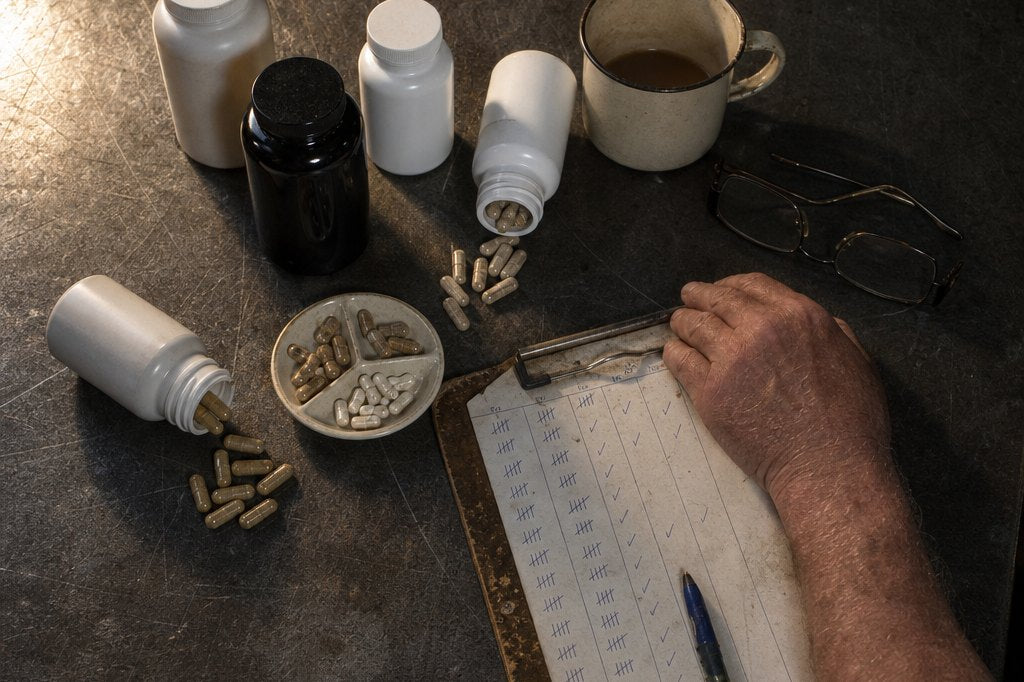

Every woman who volunteered for this test arrived with the same cupboard. Cranberry in three forms, a bag of D-mannose, a probiotic marketed at women, and a carton of juice that had been in the fridge door for a decade.
That is the actual problem with this category. It is not that nothing works. It is that the products are sold as if they all do the same job, our panel bought them one at a time over years, and not one of them had ever been told what job the thing in her hand was actually doing.
So we bought all five at retail, gave one to each participant for 90 days, and asked them to record the same four things every evening. What follows is the ranking, the scoring criteria, and the one product that did something none of the others attempted.
- Products tested
- 5, bought at retail, no samples accepted
- Duration
- 90 days, one product per participant
- Participants
- 51 women aged 40 to 65, three or more courses in the past year
- Primary measure
- Urgency episodes in the weeks BETWEEN courses, self-recorded
- Secondary measures
- Daytime trips, incomplete emptying, night interruptions
- Not measured
- Infection counts. This is a symptom study, not a clinical trial, and nobody was asked to change anything their doctor had prescribed
- Funding
- Reader-supported. No manufacturer paid for placement in the test.
What we scored, and why those four things
A bladder wall is supposed to stretch as it fills and report full when it is full. The working theory our clinical reviewer set the criteria against is that in women with years of recurrence, that wall is carrying a film of mineral and acid deposit laid down out of their own urine — and that coated tissue cannot stretch, so it calls full at about a third.
If that is what is happening, then getting the surface back takes three separate jobs in a specific order, and there is a fourth question that disqualifies a product outright.
The first job is defensive. Something has to make it harder for fresh mineral and acid residue to get a grip on the bladder wall. This is the one job the market is genuinely good at, and it is why so many people report that a cranberry capsule helped a little and then stopped helping — it was doing job one properly and nothing was doing jobs two or three.
The second job is the one almost nothing on the shelf attempts, and it is the reason most people in our panel had a cupboard full of things that half-worked. Ten or twenty years of accumulated film does not leave because you stopped adding to it. Something has to break the bond between the deposit and the tissue.
Under the deposit is tissue that has been irritated for years and is reporting full long before it is. A calm lining stretches; a lining that stretches stops raising the alarm at a third of a bladder. Products that skip this feel like nothing is happening even when the chemistry is working.
This one is scored in reverse and it disqualified two products outright. A diuretic makes you pass more urine more often. Every person on our panel came to this test because they were already going too often, so a product whose entire mechanism is 'you will go more' is solving the opposite problem to the one they have.
Each product was scored out of 10 against all four. The scores below are our panel's diaries, not the manufacturers' claims.
The ranking
Cranberry Juice Drinks and Flush Sachets
AvoidThese are the two products that made our reviewers angriest, for opposite reasons.
The juice is not cranberry in any meaningful dose. The cartons our panel brought in were mostly water and apple concentrate, several under five per cent cranberry, carrying twenty-something grams of sugar a glass to make them drinkable. Women in our panel had been drinking a glass every morning for up to eleven years. The ingredient was never the problem; the form was.
The flush sachets are worse, because they work exactly as described. A flush sachet is a diuretic — the mechanism is that you pass more urine, more often, and the manufacturer counts that as success. Every woman on this panel came to us because she was already going too often.
- Cheap
- Widely available
- Juice is a fraction of extract strength and carries the sugar
- Flush sachets are diuretics and make the core complaint worse
- Neither touches deposit already on the wall
Women's Probiotic Capsules
Wrong targetThis is the product our panel had spent the most money on for the least measurable return, and we do not think that is the manufacturers' fault so much as the shelf's. A probiotic is aimed at flora. It is not aimed at, and does not claim to be aimed at, the surface of the bladder wall.
Our panel's urgency diaries on this were statistically indistinguishable from the weeks before the test started. Several participants reported feeling generally better, which we believe, and which is not what we were measuring.
- Not a diuretic
- No side effects reported
- Does not address any of the three jobs
- Most expensive per month of anything on test
- Marketed in a way that implies more than it claims
D-Mannose Powder
Half a jobD-mannose has a real and specific mechanism and a devoted following, and a third of our panel arrived already taking it. It works on what adheres to the wall, which puts it broadly in job one alongside cranberry.
What it does not do is lift a film that has been building since 2014, and it does nothing for the irritated tissue underneath. Our participants on D-mannose recorded the smallest change of any active product after week three, and several of them described it exactly the way they described cranberry: it did something at first.
- Genuine, well-understood mechanism
- Not a diuretic
- Addresses only the first job
- No effect on existing deposit or on the lining
- Expensive per gram for what it covers
Standardised Cranberry Extract Capsules
Good at one jobWe want to be fair to cranberry, because it is the ingredient this whole category is built on and it is genuinely good at what it does. A proper standardised extract concentrates the proanthocyanidins to a strength the research was actually run on, and our panel's urgency scores in the first month improved more on this than on anything except the winner.
Then they stopped improving. Which is exactly what you would expect from a product doing job one and only job one — it makes it harder for new deposit to get a grip, and it does nothing at all about the years already sitting on the wall.
Worth buying. Not worth expecting it to finish the job on its own.
- Real, measurable effect on new buildup
- Cheap and widely available
- Not a diuretic
- Does nothing about existing deposit
- Progress plateaus at around week four
- Doses vary wildly between brands
Rensa Bladder Sediment Complex
Does all three jobsThis was the only product on test that attempted all three jobs, and the only one where our panel's diaries kept improving past week six instead of levelling off.
It is built as three named blends, in a deliberate order. CranShield is 200 mg of standardised 30% cranberry extract with 100 mg of astragalus root — job one, at roughly four times the cranberry our panel was getting from the store-brand capsules. Sedraclear is chanca piedra, horsetail and java tea — job two, the one nothing else on test even tried. UrsiCalm is uva ursi, buchu, goldenrod and nettle — job three, the tissue underneath.
Two capsules, once a morning. It is not a diuretic and it is not a water pill, which on this scoring matters as much as what it does contain.
- Only product on test that addresses deposit already on the wall
- Standardised cranberry at roughly 4x the store-brand dose
- Diaries kept improving past week six
- Not a diuretic
- Two capsules daily is a routine, not a one-off
- Sells direct only, so you cannot pick it up locally
The four jobs, side by side
| Product | Stops new buildup | Lifts existing sediment | Settles the lining | Not a diuretic |
|---|---|---|---|---|
| Juice drinks / flush sachets | ||||
| Women's probiotic capsules | ||||
| D-mannose powder | ||||
| Standardised cranberry extract | ||||
| Rensa Bladder Sediment Complex |
y = does this job · p = partially · n = does not. Scored against our panel's 90-day diaries and the criteria set by our clinical reviewer.
The verdict
The honest summary of this category is that most of it does job one, none of it except the winner attempts job two, and two products actively work against the reason our panel came to us.
If you are going to buy one thing, buy the one that does all three. If you are going to keep buying cranberry, buy a standardised extract rather than a carton, and know that you are buying a shield rather than a clear-out.
And if you have an infection, that is a conversation with your doctor and nothing on this page changes it. What we tested is the part that is left over afterwards, which is the part our panel had never had anybody look at.


